Blacksheep Mind Get the book, $12

A Blacksheep Mind web book · Content that grows

It feels like nobody sees you unless you pay.

Count where your customers really come from, then work through the ways in that keep going when the ads stop: your Google listing, honest reviews, people telling people, a list of customers who asked to hear from you, and the businesses and neighbors around you. For local shop, service and trade owners.

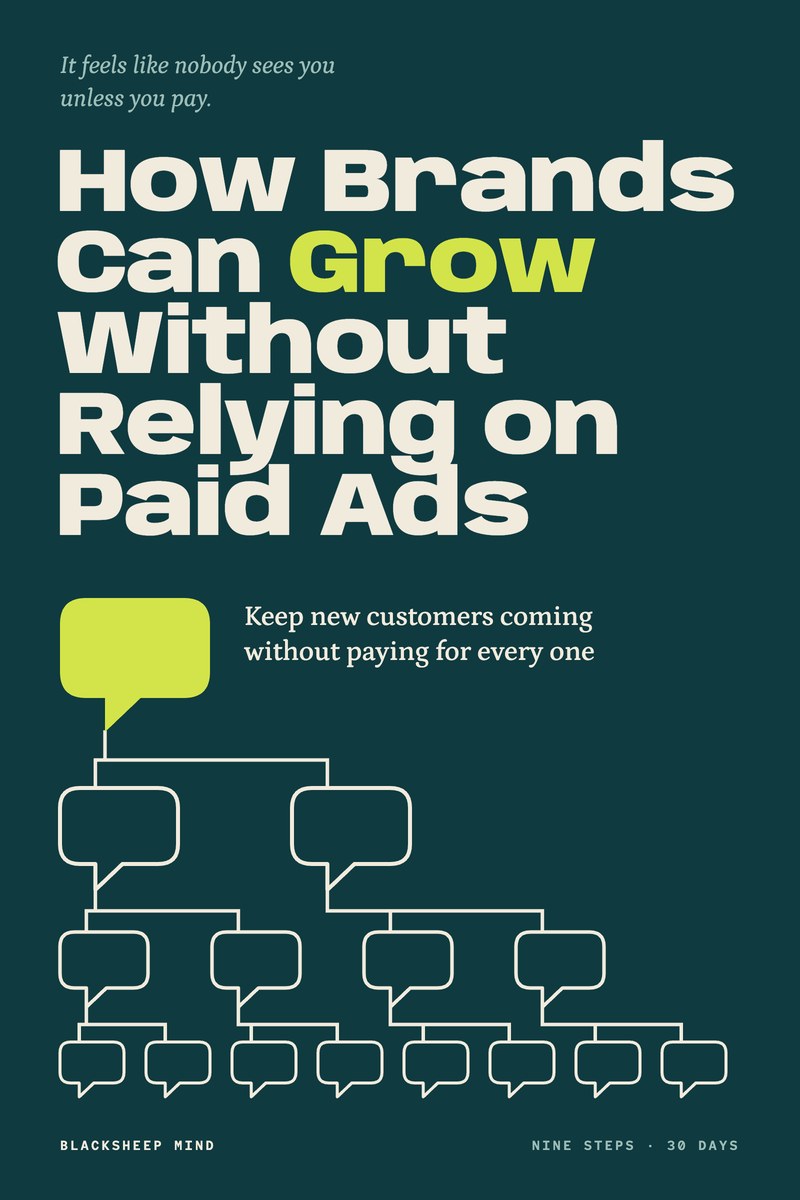
How Brands Can Grow Without Relying on Paid Ads. Keep new customers coming without paying for every one.

The cover of How Brands Can Grow Without Relying on Paid Ads.
Read it online, or download the PDF to keep or print. Nothing is posted to you.
Chapters
9
Tools
3
Reading
54 min
Price
$12
Get the book, $12

Read it tonight on your phone or laptop. One price, no upsells. No refunds: you get the whole book straight away.

The moment

You turned the ads off, and the phone went quiet.

  • The boosted posts you switched off to save money.
  • Two weeks that felt quieter than they should have.
  • The price of one click, and the app you closed when you saw it.
  • The money already spent, with not much to show for it.

Without the ads, it’s easy to feel invisible. But ads aren’t the enemy. If one pays for itself, keep it. The trouble is relying on them: every customer costs money, and the day you stop paying, they stop coming. There are ways in that keep working when the money stops, and you probably have a few already.

What’s inside

Nine steps, in the order you’d do them

  1. 01

    Count Where Your Customers Already Come From

    Ask every new customer one question for two weeks, keep a tally, and see what each way in brings, ads included.

  2. 02

    Fix Your Google Listing Before Anything Else

    Look yourself up as a stranger would, then fix the hours, category, services and photos. It’s free, and it’s often wrong.

  3. 03

    Ask Every Customer for an Honest Review

    Ask everyone, in person, when the work is done, then send the link. Never pay, reward or pick who you ask, and reply to every review.

  4. 04

    Say What You Do in the Words People Search

    Use the words customers actually type, on your website or page, and make your name, address and phone match everywhere.

  5. 05

    Make Your Business Easy to Recommend

    One sentence for people to repeat, a small card to hand over, and a thank-you for everyone who sends a friend.

  6. 06

    Build a List of People Who Asked to Hear From You

    A small email or text list, made only of people who said yes, and one or two useful emails a month.

  7. 07

    Team Up With the Business Next Door

    Pick one nearby business whose customers could be yours, and try one small thing together.

  8. 08

    Show Up Where Your Neighbors Already Gather

    Markets, fairs, clubs and local groups, or a free class of your own on the same day each month.

  9. 09

    Put Social Media Back in Its Place

    Post at a pace you can keep, and give every post a job: point to the real things you’re now doing.

Plus a short introduction and a closing chapter that turns the nine steps into a 30-day plan and a second count. 9 chapters, about 54 minutes to read.

A page from the book

Before you spend another dollar, ask one question.

Step 1 · from the book, word for word

Count Where Your Customers Already Come From

A case

Forty customers and a pencil

For months, Wairimu had boosted her neighborhood bakery’s posts at $10 a day. It felt like the only thing keeping the shop seen. With the holidays coming, her reflex was to boost more.

Instead, she taped a tally sheet by the register and, for two weeks, asked every new face, “Is this your first time in? How did you hear about us?”

Of 40 new customers, 14 said a friend or family member, 10 walked past, eight found her on Google Maps, four saw her own posts, three saw an ad and one didn’t remember.

Then the sum. Two weeks of boosts at $10 a day came to $140. Divided by the three who said “an ad”, that’s about $47 for each new ad customer. Their first order was usually about $12.

She knew the count wasn’t perfect, and some ad customers might become regulars. But only three of 40 had mentioned an ad, and the ads got all her money and most of her attention. She kept one $10 boost on Saturdays, about $40 a month instead of $300, and spent the hour she used to spend choosing boosts on her Google listing, which had three photos.

What to say
Instead of

“Can I ask you a quick survey question?”

Try

“Is this your first time in? Welcome. How did you hear about us?”

Try

“Before I let you go, how did you find us?” (at the end of a phone booking)

Try

“One question: how did you first hear about us?” (as a line at online checkout)
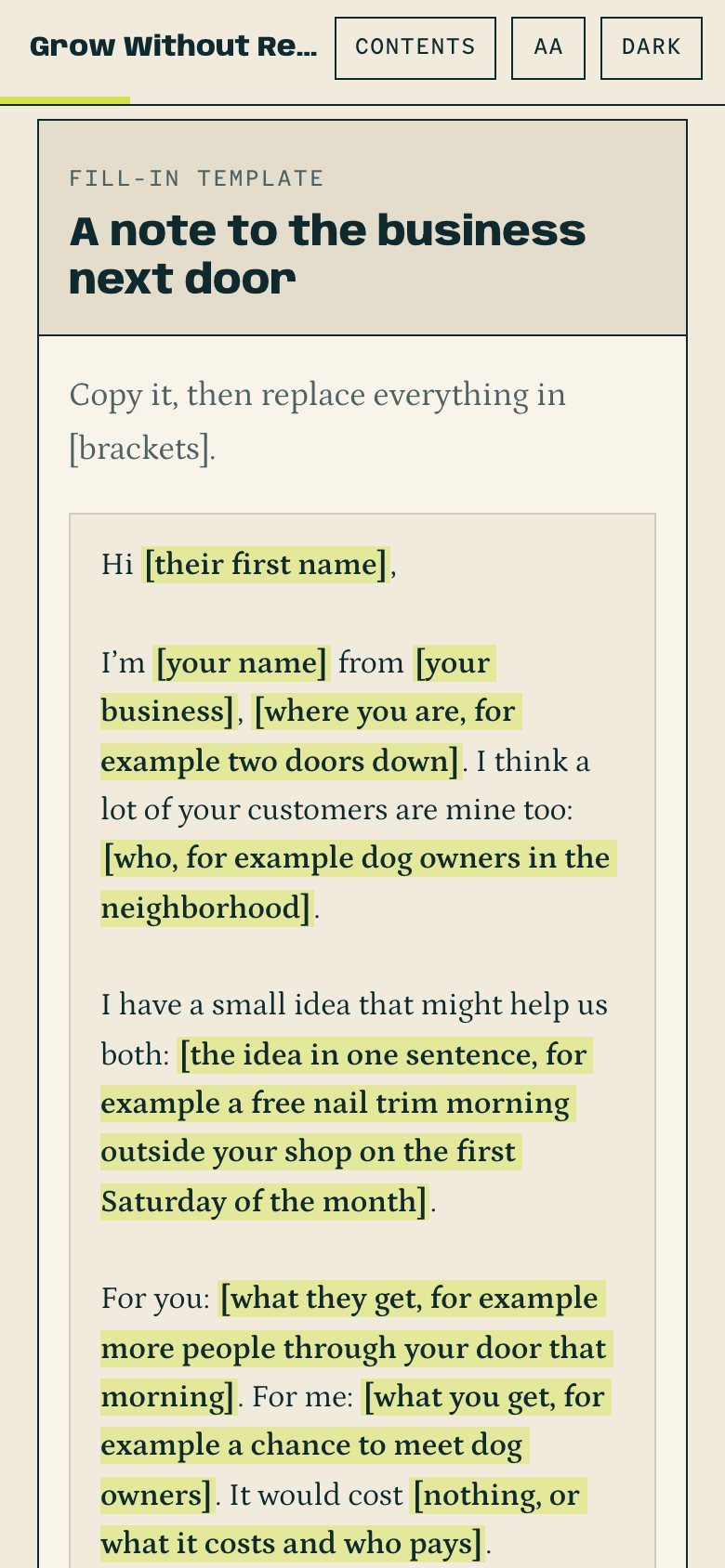
The note to the business next door in the web book, on a phone.
The note to the business next door, ready to copy
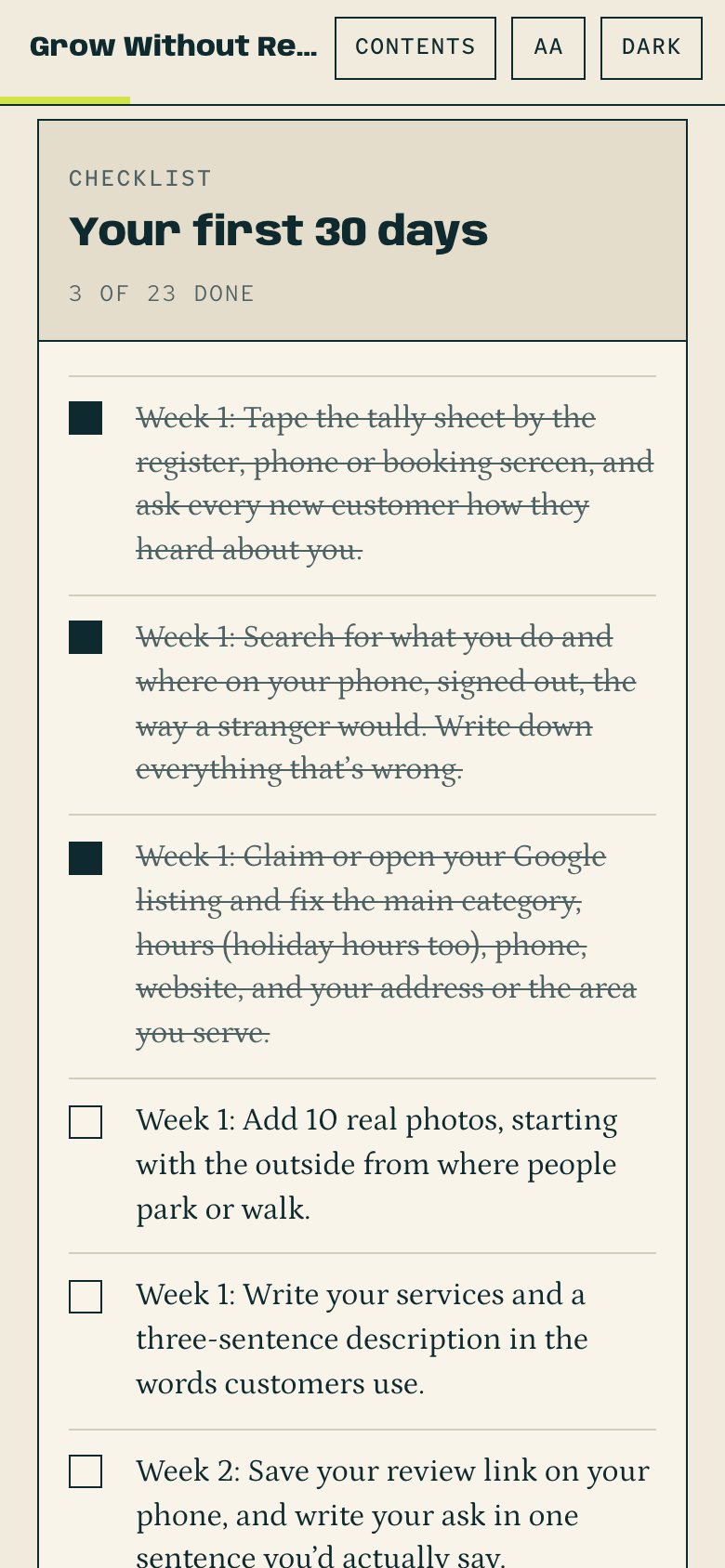
The first 30 days checklist in the web book, on a phone, with three items ticked.
Your first 30 days, ticked off on your phone

The tools

A sheet to count, a note to send, a month to tick off

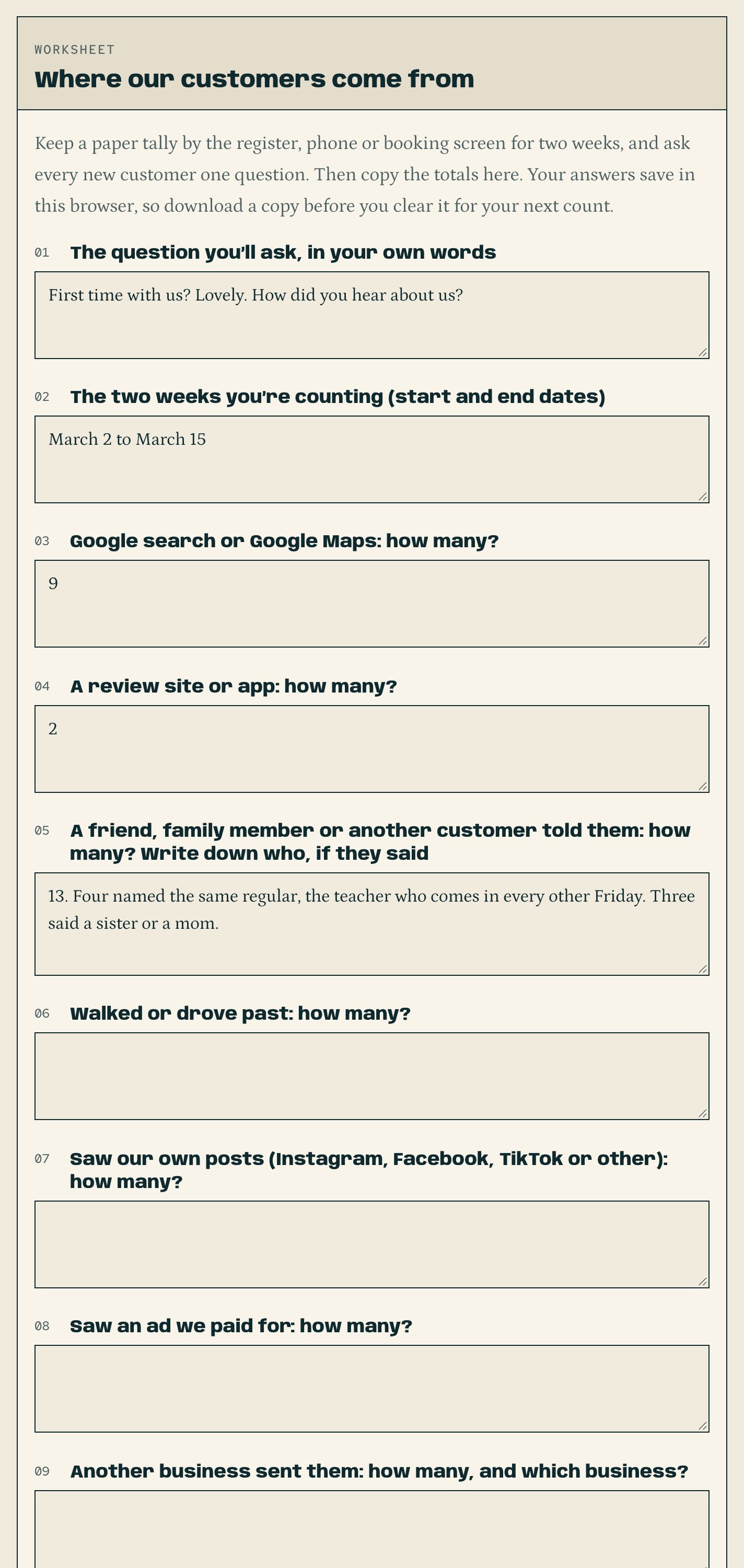
  • WorksheetWhere our customers come fromOne question, two weeks, a tally by the register, and the sum that shows what each ad customer really cost. Fill it in again at day 30.
  • Fill-in templateA note to the business next doorA short, friendly note offering one small thing to try together, with gaps for your names, your idea and the date.
  • ChecklistYour first 30 daysThe nine steps as small jobs over four weeks, to tick off on your phone, ending with a second count.
The where our customers come from worksheet in the web book, part filled in with an example.
The count sheet, with a made-up example filled in

Who it’s for

For businesses with a door, a van or a booking page

For you if

  • You run a cafe, bakery, salon, barbershop, repair shop, gift shop or studio, or a trade that goes to the customer.
  • You boosted posts or ran ads, and spent more than you got back.
  • You turned the ads off, or never had the money to start, and it feels like nobody sees you.
  • You’re not sure where your customers actually come from.

Not for you if

  • You want to hear that ads are bad. They aren’t, and if one pays for itself, the book says keep it.
  • You want help writing posts and captions. Other books on our shelf cover posting.
  • You want a promise of more customers, more reviews or the top spot on Google. Nobody can honestly make one.
Get the book, $12

9 steps · 3 tools · read tonight

Your questions

Before you buy

Does this tell me to stop running ads?

No. If an ad is paying for itself, keep it. The book helps you see what each way in brings, ads included, and build the ones that don’t stop when the money does.

Will this get me more customers?

It can’t promise numbers, and no honest book can. It gives you a way to count where customers come from now, and a plan to work on the unpaid ways in, one at a time, so you can see what changes.

I’ve never touched my Google listing. Is this too advanced?

No. It starts with searching for yourself on your phone, the way a stranger would, and fixing what’s wrong. No tricks, and nothing to pay for.

I only sell online. Is it for me?

Mostly. The Google listing and neighborhood steps are for businesses that meet customers in person or go to them. The count, reviews, recommendations, the list, teaming up and social media all apply.

Is this about posting more on social media?

No. It’s about everything besides posting. One step puts social media in its place among the other ways in. Other books on our shelf cover the posts themselves.

How long will it take?

About 54 minutes to read. The plan runs 30 days, and most steps take under an hour.

Is it a PDF?

You get both. Read it online on your phone or laptop, where the worksheets save as you type, or download the PDF to keep or print. In the PDF, the worksheets have lines to fill in by pen.

How Brands Can Grow Without Relying on Paid Ads

Read it tonight. Ask your first customer tomorrow.

$12one price, no upsells
Get the book, $12

Read it online, or download the PDF to keep or print. Nothing is posted to you. No refunds: you get the whole book straight away.